“Logical” Consequences
What exactly are “logical” consequences? For that matter what are “natural” consequences? And what’s the difference? Before we begin to define and differentiate these terms, we first need to clarify the purpose of consequences.
The aim of consequences is of course to encourage a change in our child’s undesirable behavior. Effective consequences do not punish but rather, teach. The word punishment connotes a punitive or hurtful interaction between parent and child. This approach typically creates anger and resentment in the child. Certainly not conducive to gaining cooperation. Effective consequences invite cooperation and allows the child to make appropriate choices.
Natural Consequences are the direct result of the child’s actions. Typically, nothing is required on the part of the parent. For example, a toddler during play activity may ignore the warning signs of needing to use the bathroom until it’s too late, and consequently has an accident. From this experience, the child learns to pay closer attention to his or her bodily signs.
Since some natural consequences might be detrimental to the child or an immediate consequence will not likely result due to the child’s behavior, we must then create an “artificial” or logical consequence.
Logical Consequences are imposed by someone other than the child, i.e., parents, teachers, or peers. They are “logical” in that they are designed to have a reasonable connection between the misdeed and the consequence. The more the consequence relates to the child’s behavior, the more likely the child is able to accept and learn from it. The child is therefore more willing to adjust their behavior.
When targeting a pattern of undesirable behavior, we present the child with choices. Based on the child’s choice (behavior) a consequence may or may not be imposed by the parent. But it remains the child’s choice. Remember, at this point the child now
owns the problem, and must be allowed to make the choice, even if its the wrong one. The parent then
follows through on the consequence if necessary.
Like “natural” consequences, “logical” consequences do not punish nor do they feel personal in nature. As any fact of life, they are more readily accepted by children.
Helping Kids Take Responsibility
Or, Who Owns The Problem?
Parents often struggle with getting children to take initiative or responsibility. Chores and school work are probably the two most common complaints I hear from parents. These situations can lead parents to become overly involved in attempts to make the child take responsibility. It seems the more the parent tries to gain the child’s cooperation, the less willing they become.

The parents involvement, “micro-management”, worry or nagging informs the child that mom/dad are willing to take on the problem. Parents are aware that they are more anxious about the problem than the child seems to be.
Consequences tend to be ineffective because the child does not yet own the problem – they aren’t worried about it – after all mom or dad does enough worrying for the both of them.
Before getting involved, the parent should ask themselves,
“who owns this problem?” If the problem potentially effects only the child, then the child owns the problem. If on the other hand the child’s behavior directly effects the parent (or others), then the parent owns the problem. The answer to this question informs the parent in their approach to resolving the situation. In some instances it may be sufficient to simply allow the “
natural” consequences of the child’s actions to correct the behavior. In other words, nothing is required of the parent. For example, if the child fails to complete a homework assignment, the child faces the natural consequence of having to explain to his or her teacher why the assignment wasn’t done. In other situations,
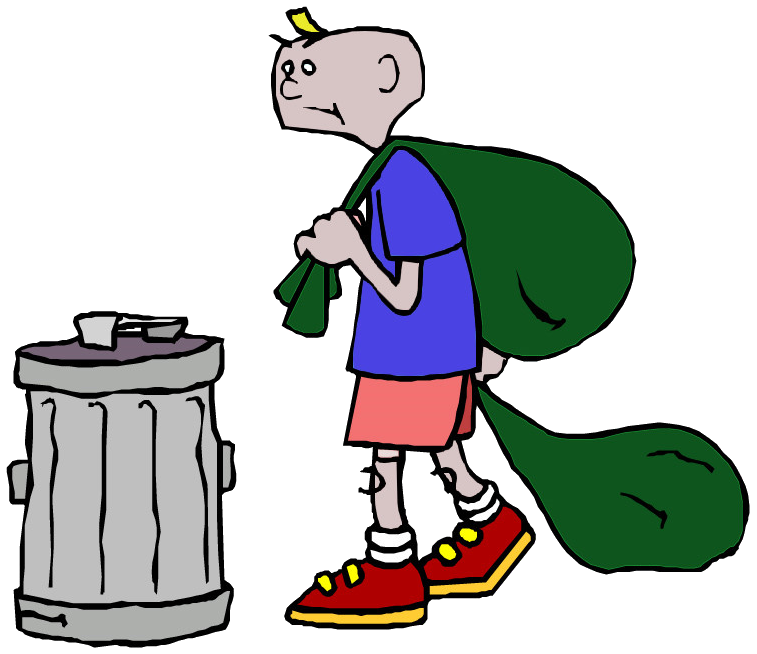
“logical“ consequences may need to be employed by the parent. So for example, if the child fails to take out the garbage within the expected time frame, the child might incur monetary fines.
The child may have come to expect that the parent will take ownership of the problem. Interventions from the parent therefore need to be designed to put the problem back in the child’s lap. Conversations about the problem should convey this to the child. The parent might ask the child to problem solve rather than being upset with the child or demanding change. Requiring the child to come up with a solution communicates the underlying notion that it is indeed the child’s problem. The parent may accept the child’s solution, give it a trial run, point out the potential pitfalls in the child’s ideas, or offer their own suggestions along with the use of appropriate consequences if necessary. In the end, an agreement is decided upon between the parent and child with the promise of revisiting the solution within a certain time frame in order to monitor progress and make revisions as necessary.
Sometimes “Less” is “More”
Parenting can be a challenging experience for most parents. Because we’re the “parent” We often feel like we should have all the answers when it comes to raising our children. And when we don’t have the answer, we may be compelled to say, “…because I said so!” We may feel as though we have to do something when our authority is challenged and correct the child.
When children oppose us, they are looking to gain power, but in a negative way. Sometimes, however, a response invites more opposition, escalating the situation: the battle is on!
What if the situation requires us to do absolutely nothing? “What?!” You might ask, “…and give in or allow my child to disrespect my authority?” Well, maybe. Let’s take a look at a couple of examples when this indeed might be the best approach.
Consider our first example: A toddler discovers a new annoying vocal sound or behavior. The parent attempts to correct or stop the behavior. Instead of reducing or stopping the behavior, it increases. In this situation it’s fairly obvious that the child has learned that this is a good way to get dad’s attention. So, the “correction” actually led to more of the behavior.
In our second example, a child refuses to put on their seat belt. A power struggle ensues. The parent of course wins in the end, but not without tremendous upset, leaving both parent and child unhappy.
What if the parent ignores the child’s behavior? In this case, not putting on their seat belt. By doing so, the parent removes the element of opposition. Remember, it takes two to tango. Without the parent engaged, the child has lost their goal in the activity, that is, to engage the parent in battle. The child may dawdle, delay or hold out to see if the parent will join in. But when the parent refuses, the child invariably gives up.
The lessons for the child to learn here are: No 1, mommy doesn’t play this game anymore, and No 2, the car doesn’t move until everyone has their seat belt on. Once the child puts on their seat belt, the car begins to move, mom doesn’t say a word about the incident (avoiding giving further attention to the matter).
Paradoxically, the more assertive the parent becomes the more they hand their power over to the child. The lesson for the parent in these examples is to understand that sometimes there is power in repose.
These examples can be generalized to children of all ages. If we take a moment to assess the situation (rather than an immediate response), we will find numerous situations with our kids in which Less is certainly More!